Bringing a Cat to the United States: Import Rules, Flights and Costs
What the CDC, USDA, your state and the airline each require when a kitten comes from another country, the three ways cats travel, what it costs, and how to spot the import scams.
By Purry Editorial · 8 min read · Published Oct 5, 2026
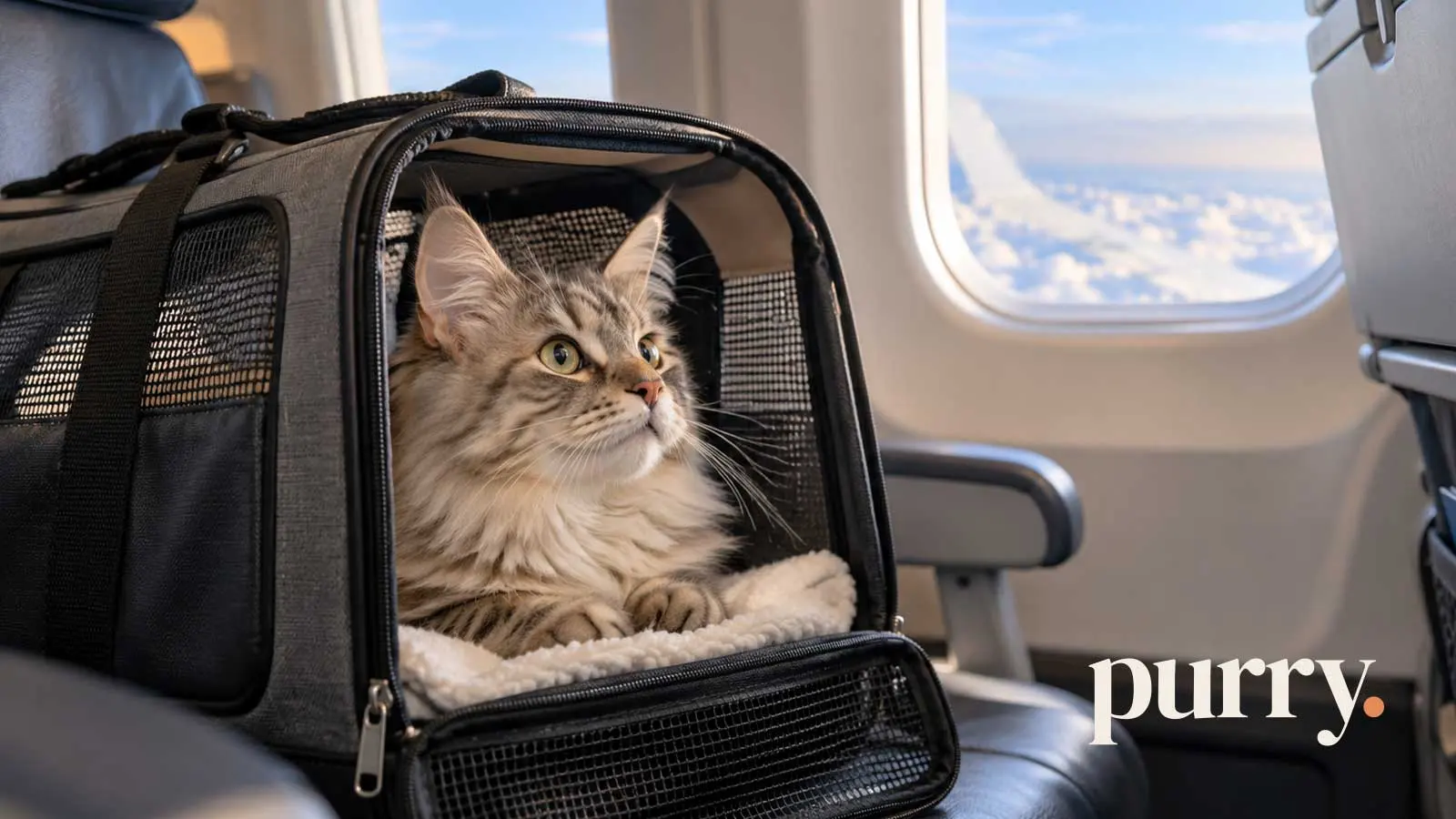
Pedigree kittens regularly travel to American homes from established catteries in Poland, Ukraine, the UK, Western Europe, Japan and elsewhere. For an experienced exporter the process is routine. For the buyer waiting at the other end, the mix of airline rules, veterinary paperwork, customs and state requirements can be confusing. This guide explains the process from the buyer's side, with notes for the breeder arranging the export. It is current as of October 2026; import requirements and airline policies change, so confirm the current rules for your destination and flight before booking.
The short version
- US federal import requirements for ordinary pet cats are relatively light. The CDC requires cats to appear healthy on arrival and does not require proof of rabies vaccination. USDA APHIS has no animal health import requirements for ordinary pet cats.
- Your destination state or territory may require vaccination or health documentation, and the airline sets its own age, carrier and veterinary rules.
- Internationally purchased kittens commonly travel with the buyer, with a flight nanny in the cabin, or as manifest cargo through a professional pet shipper.
- Transport costs vary widely by origin, route and method. Get the complete transport price in writing before paying a deposit.
- Hawaii and Guam have separate animal entry and quarantine programs, even for cats arriving from the US mainland. Plan well in advance.
- Export requirements are set by the country the kitten leaves and can include identification, vaccination, veterinary certification and government inspection.
Layer one: the US federal rules
CDC. Cats are subject to inspection at the port of entry and must appear healthy. If a cat looks ill, a veterinary examination at the owner's expense may be required before entry. The CDC recommends rabies vaccination but does not require it for cats. There is no CDC import permit for cats.
USDA APHIS. USDA APHIS Veterinary Services has no animal health requirements for importing an ordinary pet cat into the United States. (Hawaii and Guam have their own programs; see below.)
Customs and Border Protection. A cat imported for personal, non-commercial use is duty-free. If you or a flight nanny accompanies the cat, declare it on arrival and carry the sale contract or invoice. Cats arriving as manifest cargo go through cargo clearance, which can involve extra documentation, handling charges or a customs broker.
For an ordinary pet cat those federal requirements are light. The destination state, the airline and the exporting country can add substantially more paperwork.
Layer two: the destination state
State requirements vary. Depending on the destination, a cat may need a current rabies vaccination, a certificate of veterinary inspection or other documentation. Check the destination state's agriculture department or state veterinarian before the breeder completes the export paperwork, so the breeder's vet can include what your state wants. USDA APHIS keeps a directory of state entry requirements.
Hawaii and Guam. Both have their own animal entry and quarantine programs, even for cats arriving from the US mainland; do not treat them like ordinary US destinations. Hawaii can allow Direct Airport Release or entry through its 5 Day Or Less program if every requirement is completed in advance: microchip, qualifying rabies vaccinations, a passing FAVN rabies antibody test, paperwork and waiting periods. Start months ahead rather than when the kitten is ready to fly. Guam requires an entry permit, with documents submitted at least 30 days before arrival.
Layer three: the airline
The airline's rules decide more than the government's.
- Cabin. Some airlines allow a cat in an under-seat carrier on eligible international routes, for a fee. Minimum age, carrier dimensions, combined cat-and-carrier weight, permitted routes and the number of animals allowed in the cabin vary considerably. Reserve the pet space when you book, because airlines cap cabin pets per flight.
- Cargo (manifest). The cat flies in a pressurized hold in an IATA-compliant crate, booked through a pet shipper or the airline's cargo desk. Required when nobody is flying with the cat. Expect seasonal temperature embargoes, and note that many airlines refuse brachycephalic breeds (Persians, Exotics, Himalayans) in cargo. Cargo arrival means collecting the cat from the airline's cargo facility, not baggage claim, often with a handling fee and, at some airports, a customs broker.
- Checked baggage. Fewer airlines offer this on international routes every year. Treat it as unavailable unless the airline confirms it.
The three ways a kitten actually gets here
Flight nanny. A courier accompanies the kitten as an in-cabin pet and meets you at the arrival airport. "Flight nanny" is an industry term, not a government transport category; it is a person travelling with a pet. It is a common option for breeder-to-buyer imports, and breeders who export usually have nannies they use regularly. You pay the nanny's fee plus the airline pet fee and a share of the nanny's ticket, and a domestic leg if you are not near the arrival hub.
You fly. Cheapest if you were going anyway, and you meet the breeder and see the cattery, which no amount of video replaces. Allow a day for the vet appointment and paperwork on the breeder's side.
Cargo with a shipper. For buyers who cannot travel and breeders without a nanny network. A pet shipper that belongs to IPATA handles the crate, the booking, the export certificate and sometimes the customs clearance. Cargo involves more logistics than cabin transport and may be subject to weather restrictions, routing limits and extra handling requirements.
What the breeder prepares
Export paperwork depends on the country the kitten leaves, the destination and sometimes the type of transport. The breeder should confirm the requirements with their country's veterinary or animal quarantine authority before booking the flight. Depending on the route, this can include:
- Microchip identification.
- Rabies vaccination, if the airline, the destination state or a transit country requires it.
- A veterinary examination and an export certificate or government endorsement. Japan requires an export inspection through the Animal Quarantine Service. Great Britain uses destination-specific export health certificates where required. Commercial movements of cats within the EU must be registered in TRACES and accompanied by a health certificate.
- The kitten's registration transfer or pedigree, the sale contract, and the vaccination record.
Ask for scans of all of it before the flight. A breeder who exports regularly will send them without being asked.
Timeline
Many internationally sold kittens travel at roughly 14 to 16 weeks, after their initial vaccinations and once they meet the airline, registry and export requirements for the route. The earliest travel date depends on the origin country, the destination, the airline and the breeder's own policies. Add the export paperwork appointment in the final days before travel and the flight booking a few weeks earlier. From reservation to arrival, plan on two to three months.
Costs to expect
Planning estimates, not fixed rates. International pet transport pricing varies a great deal by origin, destination, season, routing, crate requirements and whether a professional shipper is used. Get a written quote before paying a deposit.
| Item | Planning estimate |
|---|---|
| Kitten (pet, from a verified cattery abroad) | Set by the breeder; often similar to US prices for the same breed |
| Flight nanny, Europe to US hub | Roughly $800 to $2,000 |
| Airline in-cabin pet fee (if you fly) | Set by the airline; check the current fee |
| Cargo with a shipper | Roughly $1,500 to $3,500 |
| Export vet work and vaccinations | Roughly $100 to $300 |
| Domestic connecting leg | Roughly $100 to $400 |
Deposit policies vary by breeder. Before paying one, make sure the written contract states the kitten, the total price, the deposit amount, the refund terms and who pays transport. Purry never holds the money for a cat.
How to spot an import scam
Import is the favorite setting for kitten scams because the buyer cannot visit and extra fees sound plausible.
- Unexpected demands after payment for a temperature-controlled crate, refundable insurance, permits, vaccinations or "customs clearance" before the kitten can be released. This is the classic pet shipping scam. Verify any shipper independently through the company's official contact details before sending more money. A company claiming that "IPATA" itself is shipping your kitten is a red flag: IPATA is a trade association, and its member companies are the ones that transport animals.
- A cattery with no registry record. A breeder on Purry with the Registry Checked chip has had their registry's record of the cattery name checked by a person. The chip confirms a registry record, not who is messaging you or how the cats are kept.
- Payment by gift card, cryptocurrency or an untraceable money transfer service. An international bank transfer is not suspicious by itself, but check that the account holder matches the breeder or their registered business before sending money. Refusal of a video call with the kitten and the breeder in the same frame is another warning sign.
- Prices far below the breed's normal range "because of a cancelled buyer".
If anyone asks for a fee to release a cat at a US airport that was not in the original quote, stop and call the breeder on the number from their registry listing.
For breeders selling to the US
Three things make US buyers say yes:
- A TICA or CFA registration alongside your home registry. It makes the pedigree familiar to American buyers and can simplify later registration in the United States.
- Your delivery options written on the listing: flight nanny with a typical price, cargo, or buyer collects. Purry has a Delivery field for this.
- A contract in English that says who pays transport, what happens on a weather embargo or missed connection, and when ownership passes.
Sources
- CDC, Bringing a cat into the United States: https://www.cdc.gov/importation/bringing-an-animal-into-the-united-states/cats.html
- USDA APHIS, pet travel into the United States and state entry requirements: https://www.aphis.usda.gov/pet-travel
- Hawaii Department of Agriculture, Animal Quarantine: https://hdoa.hawaii.gov/ai/aqs/animal-quarantine-information-page/
- CBP, bringing pets into the United States (duty-free personal use): https://help.cbp.gov/
- IPATA, pet scams: https://www.ipata.org/pet-scams
- IPATA, find a pet shipper: https://www.ipata.org/